

 Blog
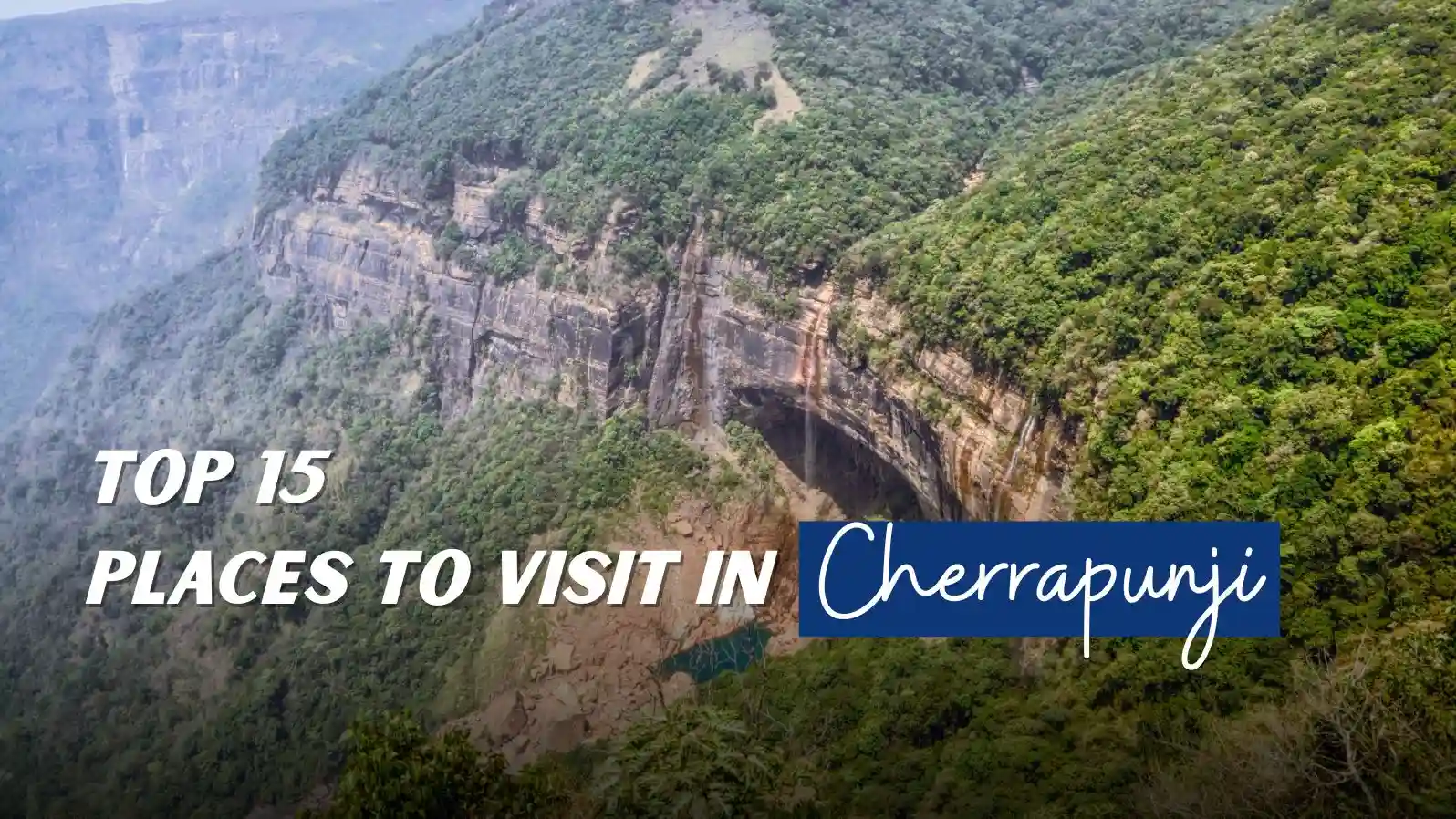
BlogClose your eyes and imagine this: thick mist rolling over towering green cliffs, the distant roar of water hitting rock 340 metres below, and the earthy smell of a forest that has never stopped raining. That is Cherrapunji or Sohra, as the local Khasi people have always called it.
Cherrapunji sits in the East Khasi Hills district of Meghalaya, roughly 54 km south of Shillong. It is historically recognised as one of the wettest places on Earth and for good reason. But Cherrapunji is so much more than rainfall records. It is a destination that rewards every kind of traveller: the waterfall chaser, the cave explorer, the trekker looking for a living, breathing bridge made entirely from tree roots, and the slow traveller who just wants to sit above a valley and watch clouds pour in from Bangladesh.
In this guide, we cover the top 15 places to visit in Cherrapunji from iconic waterfalls and ancient caves to hidden gems and cultural experiences that most tourists skip. Whether you are planning a day trip from Shillong or a 2–3 day stay in Sohra, this list covers everything you need.
Planning your Meghalaya trip? Check out our Meghalaya Tour Packages fully planned itineraries with transport, stays, and guided treks included.
Quick Snapshot: Cherrapunji at a Glance
| Details | |
| Local Name | Sohra |
| Location | East Khasi Hills District, Meghalaya |
| Distance from Shillong | ~54 km (2–2.5 hrs by road) |
| Best Time to Visit | October to February (clear skies, waterfalls flowing) |
| Ideal Trip Duration | 1–3 days |
| Nearest Airport | Umroi Airport, Shillong (~80 km) |
| Nearest Railway Station | Guwahati (~150 km) |
| What It’s Famous For | Living root bridges, Nohkalikai Falls, caves, waterfalls |
Top 15 Places to Visit in Cherrapunji
1. Nohkalikai Falls — India’s Tallest Plunge Waterfall
If Cherrapunji has one absolute must-see, it is Nohkalikai Falls. Plunging from a height of 340 metres (1,115 feet), it holds the title of India’s tallest plunge waterfall and ranks among the tallest in the world. The waterfall cascades off a sheer red-rock cliff into a turquoise-green plunge pool far below a pool that shifts colour between aqua, blue, and green depending on the season.
The name carries a haunting story. ‘Noh Ka Likai’ means ‘the leap of Likai’ in Khasi. Legend has it that a woman named Ka Likai, widowed and remarried, returned one day to find that her second husband had cooked her infant daughter in a fit of jealousy and rage. Realising what had happened, she ran to the cliff’s edge and leapt to her death. The waterfall where she jumped has borne her name ever since.
The viewpoint is accessible by a short walk from the parking area. A viewing gallery overlooking the falls gives you the full panorama the white ribbon of water, the gorge, and on clear days, the plains of Bangladesh stretching to the horizon
| Nohkalikai Falls | Quick Info |
| Distance from Sohra | ~7.5 km |
| Entry Fee | ₹50 per person |
| Timings | 8:00 AM – 5:00 PM |
| Best Time to Visit | October–December (flowing well, skies clear) |
| Best For | Photography, nature lovers, all travellers |
Pro Tip: Visit between September and November. During peak monsoon (July–August), the falls are powerful but often shrouded in heavy mist. Post-monsoon gives you full flow with clear views.
2. Double Decker Living Root Bridge
There is nothing in India quite like the Double Decker Living Root Bridge of Nongriat. This two tiered bridge was not built it was grown. Over generations, the Khasi people of Nongriat village trained the aerial roots of Ficus elastica (rubber fig) trees across streams, guiding them, weaving them, and allowing them to fuse into a bridge strong enough to hold 50 people at once. The entire process takes 20–25 years per bridge.
The Double Decker is unique worldwide two levels of living root pathways crossing the same stream, moss covered and ancient, surrounded by the sound of rushing water and birdsong. It has been featured on BBC’s Human Planet and has drawn travellers from across the globe.
Getting there requires effort. From Tyrna village (about 15 km from Sohra), you descend approximately 3,500 stone steps into the valley to reach Nongriat. The one way trek takes 1.5–2 hours. The return climb is steeper and takes 2–3 hours. Allow a full day for this experience. Optional: extend the trek another hour to Rainbow Falls a stunning waterfall named for the rainbows that form in its mist.
| Double Decker Root Bridge | Quick Info |
| Trek Start Point | Tyrna Village (~15 km from Sohra) |
| Entry Fee | ₹50 per person at Nongriat |
| Trek Difficulty | Moderate (3,500 steps — descending and ascending) |
| Time Required | Full day (6–8 hrs round trip) |
| Closed On | Sundays (village decision since 2021) |
| Best For | Trekkers, adventure seekers, photographers |
Pro Tip: Start by 6:00–7:00 AM to complete the trek before midday heat. Carry at least 2 litres of water, wear grip shoes, and bring a light snack. Do not attempt this in flip-flops.
Going deeper? Read our full Double Decker Root Bridge Trek Guide for step-by-step trekking details
3. Seven Sisters Falls (Nohsngithiang Falls)
Known locally as Nohsngithiang, Seven Sisters Falls is one of India’s widest waterfalls seven distinct streams of water cascading in parallel from a high plateau edge into the gorge below. During the peak monsoon months of July and September, all seven streams run simultaneously in a dramatic curtain of white water. It is one of the most photographed sights in Meghalaya.
The best viewpoint is accessible from the road near Mawsmai village, just a short drive from Sohra. The Eco Park viewpoint also offers a good angle. Note that outside the monsoon months, some of the seven streams may reduce to a trickle or dry up but even then, the cliffside gorge itself is a spectacular view.
| Seven Sisters Falls | Quick Info |
| Distance from Sohra | ~5 km (near Mawsmai) |
| Entry Fee | Free (roadside viewpoint) |
| Best Time to Visit | July–September for all 7 streams |
| Best For | Photography, scenic drives |
4. Mawsmai Cave
All the caves in the Cherrapunji region, Mawsmai Cave is the most accessible and family-friendly. The cave is a limestone wonder formed over millions of years, with illuminated walkways that take you through a 150-metre stretch of stalactites, stalagmites, bats tucked in crevices, and passages that narrow to single-file squeezes.
Small bridges have been constructed inside for safe passage, and the lighting ensures you get a good look at the formations without needing a torch. It takes about 30 – 45 minutes to walk through. Children enjoy it, though the narrower sections require some crouching
| Mawsmai Cave | Quick Info |
| Distance from Sohra | ~5 km |
| Entry Fee | ₹20 per person |
| Timings | 9:00 AM – 5:00 PM |
| Best For | Families, all ages |
Pro Tip: Carry a light jacket the cave maintains a cool temperature year round. Combine this visit with Seven Sisters Falls viewpoint both are near Mawsmai village.
5. Arwah Cave
While Mawsmai is gentle and touristy, Arwah Cave is raw and wild. Stretching 7,194 metres in length, it ranks among the longest caves in India. The cave walls contain fossilised shells and fish bones dating back millions of years. Inside, you will find formations of white marble, stalactites, flowing underground rivers, and deposits of quartz and moon milk a soft white limestone paste.
A guided tour is mandatory here, and the cave is partially open to tourists, with a shorter accessible section and a deeper exploration route for the adventurous. Book a guide through a local operator in Sohra or directly at the cave entrance.
| Arwah Cave | Quick Info |
| Distance from Sohra | ~2 km |
| Entry + Guide Fee | ₹50–₹200 per person |
| Timings | 9:00 AM – 4:00 PM |
| Best For | Adventure seekers, geology enthusiasts |
Note: Not suitable for visitors with claustrophobia. The cave narrows considerably in the deeper sections.
6. Mawkdok Dympep Valley View
Long before you reach Sohra from Shillong, the road delivers its first jaw dropping moment at Mawkdok Dympep Valley. A sweeping gorge cuts through the landscape, and the viewpoint here is one of the most dramatic along the entire Shillong–Cherrapunji highway. In the early morning, layers of mist fill the valley like a slow tide.
The site is also popular for zip-lining across the gorge. Two options are available: a shorter zip line (₹400) and a full cross-valley zip-line (₹800) that gives you a bird’s-eye view of the canyon. Even if you skip the zip-line, do not drive past without stopping for at least 10 minutes.
| Mawkdok Valley | Quick Info |
| Distance from Shillong | ~25 km (en route to Sohra) |
| Entry Fee | Free (viewpoint) |
| Zip-line Fee | ₹400 (short) / ₹800 (cross-valley) |
| Best For | Photography, adventure, en-route stop |
7. Thangkharang Park
Thangkharang Park is a 100 acre government maintained park perched at the edge of the Khasi Hills plateau. It offers some of the finest panoramic views in Cherrapunji a sweeping canvas of green valleys, winding roads, and on exceptionally clear days, the plains of Bangladesh visible on the horizon. The park is filled with colourful flowers, manicured pathways, and several viewpoints.
The park is also the best spot to view Kynrem Falls a three tiered waterfall that drops over 300 metres through the forest below. You see it from a distance, framed by hills, which makes for a spectacular long-lens photograph. No steep trek required.
| Thangkharang Park | Quick Info |
| Distance from Sohra | ~3 km |
| Entry Fee | ₹20 per person |
| Timings | 9:00 AM – 5:00 PM |
| Best For | Families, photographers, relaxed sightseeing |
8. Kynrem Falls
Kynrem Falls descends in three distinct tiers from a height of over 300 metres through dense forest. Seen from Thangkharang Park, it appears almost impossibly tall a thin white thread against the dark green hillside. During the monsoon and post-monsoon season, the volume of water increases significantly, and the falls are often partially veiled in mist, giving the scene an ethereal quality.
Most visitors see Kynrem from the park viewpoint. Combining both in a single visit (Thangkharang Park + Kynrem Falls view) is the most efficient approach.
| Kynrem Falls | Quick Info |
| Best Viewpoint | Thangkharang Park |
| Entry Fee | Included in park entry (₹20) |
| Best Time | July–November |
9. Dainthlen Falls
Dainthlen Falls is one of the closest waterfalls to Sohra town and makes an excellent first stop when you arrive in Cherrapunji. The falls are powerful and scenic, framed by rocky outcrops. What makes Dainthlen particularly interesting is the story attached to it.
According to Khasi legend, a giant serpent called ‘Dainthlen’ once terrorised the region, swallowing people whole. A brave young man finally killed the serpent at this very spot, and the waterfall that runs over the rocks is said to flow with the serpent’s blood turning the water reddish in colour during floods. Whether myth or memory, it adds a vivid layer to the visit.
| Dainthlen Falls | Quick Info |
| Distance from Sohra | ~5 km |
| Entry Fee | Nominal fee |
| Best Time | July–November |
| Best For | Quick stop, cultural interest |
10. Wei Sawdong Falls
If you want to escape the tourist crowd and find a waterfall that most day-trippers miss, Wei Sawdong is your answer. This three tiered waterfall sits about 17 km from Sohra and requires a short 20 minute forest walk to reach. The trail itself is part of the appeal a path through moss covered trees and the sound of the river growing louder with every step.
The falls are especially beautiful post monsoon when the water volume is high but the weather is clear enough for photography. A natural rock pool at the base is refreshing to sit beside after the walk.
| Wei Sawdong Falls | Quick Info |
| Distance from Sohra | ~17 km |
| Trek to Falls | ~20 minutes on foot |
| Entry Fee | Small nominal fee |
| Best For | Offbeat travellers, photographers, nature lovers |
11. Eco Park Cherrapunji
Eco Park is a government-developed site perched high on the plateau at the edge of Cherrapunji. It offers sweeping views of the Sohra valley, deep canyons, and on very clear winter days, the Sylhet Plains of Bangladesh far below. The park is filled with orchids, ferns, and native plant species that thrive in Meghalaya’s perpetual moisture.
The park also sits above the source of Nohsngithiang (Seven Sisters) Falls so from the viewpoints here, you can look down the same cliff that the falls cascade from. It is a great place for a slow morning walk before the day’s sightseeing begins
| Eco Park | Quick Info |
| Distance from Sohra | ~3 km |
| Entry Fee | ₹20 per person |
| Timings | 9:00 AM – 5:00 PM |
| Best For | Families, botany lovers, peaceful walks |
12. Garden of Caves
About 14 km from Cherrapunji, Garden of Caves is one of those places that consistently surprises visitors who make the effort to reach it. The site contains several small caves, a series of low lying waterfalls, and natural rock formations scattered through moderately dense forest. Small ponds and streams wind between the structures, and the whole area has a primordial, undisturbed quality that feels entirely different from the more visited caves near Sohra.
There are no food stalls here, so carry snacks and water. Wear appropriate footwear the rocks near the waterfalls are slippery. Allow at least 2 hours.
| Garden of Caves | Quick Info |
| Distance from Sohra | ~14 km |
| Entry Fee | Nominal |
| Best For | Explorers, offbeat travellers |
| Note | No food stalls carry your own supplies |
13. Ka Khoh Ramhah (Pillar Rock)
Ka Khoh Ramhah, commonly called Pillar Rock, is a towering conical rock formation rising dramatically from the valley. It is one of the more unusual geological sights in the Cherrapunji area a single massive pillar of rock standing like a sentinel over the gorge below.
Local legend surrounds it: it is said that the rock is a guardian spirit in stone form, placed here to protect the Khasi people. Whether or not you believe the legend, the formation is genuinely striking and makes for a great photograph. It is located near Thangkharang Park, making it easy to combine both in a single half-day outing.
| Ka Khoh Ramhah / Pillar Rock | Quick Info |
| Location | Near Thangkharang Park |
| Entry Fee | Free |
| Best Time | October–March (clearest views) |
14. Wahkaba Falls (Rainbow Falls)
Wahkaba Falls is one of Cherrapunji’s quieter secrets a tall, isolated waterfall that cascades into a peaceful pool surrounded by thick forest. The falls are nicknamed Rainbow Falls because sunlight filtering through the mist creates visible rainbows in the spray during the right conditions. It is peaceful, less crowded, and genuinely beautiful a good counterpoint to the more famous waterfalls on this list.
The falls are best reached by taxi from Sohra (about 7 km). The viewing area is small and serene. During the monsoon and post-monsoon months, the volume is at its best.
| Wahkaba Falls | Quick Info |
| Distance from Sohra | ~7 km |
| Entry Fee | ₹10–₹20 |
| Best Time | August–November |
| Best For | Quiet sightseeing, photographers |
15. Sohra Market & Local Khasi Culture
The title of this blog promises ‘waterfalls and beyond’ and this last entry is the beyond. Before you leave Cherrapunji, spend some time in Sohra’s local market and streets. This is where you encounter Meghalaya’s living culture: Khasi women in traditional jainsem dresses selling bamboo products, handwoven baskets, and local spices.
Cherrapunji’s food is a revelation. Look for: jadoh (a spiced pork and rice dish, rich and warming), tung-rymbai (fermented soybean with vegetables), putharo (soft steamed rice cakes), and tungtap (dry fish chutney with a sharp punch). Small local eateries around the market serve these dishes fresh. This is the kind of meal you remember long after the trip ends.
| Sohra Market & Culture | Quick Info |
| Location | Sohra Town Centre |
| Entry Fee | Free |
| Best Time | Weekday mornings for most activity |
| Must-Try Food | Jadoh, Putharo, Tung-rymbai, Tungtap |
| What to Buy | Bamboo crafts, woven baskets, local honey, spices |
Best Time to Visit Cherrapunji
| Season | Months | Weather | What to Expect | Recommended? |
| Monsoon | June–Sept | Heavy rain, mist | Waterfalls at peak; caves may flood; slippery trails | For experienced travellers only |
| Post-Monsoon | Oct–Nov | Mild, occasional rain | Best balance: full waterfalls + clear skies | Highly Recommended |
| Winter | Dec–Feb | Cool & mostly dry | Clear views, comfortable trekking, falls reduced | Best for Trekking |
| Summer | Mar–May | Warm, moderate rain | Moderate waterfall flow; good overall conditions | Good Option |
The sweet spot is October to February you get clear skies, comfortable temperatures for trekking, full waterfalls (especially post-monsoon), and all attractions are fully accessible. Avoid peak monsoon unless you are specifically chasing the dramatic waterfall season and are comfortable with slippery, misty conditions
How to Reach Cherrapunji from Shillong
By Road (Recommended): Cherrapunji is 54 km from Shillong approximately a 2 to 2.5 hour drive. The road is scenic, winding through Khasi Hills with several viewpoints en route.
- Shared taxi from Police Bazaar / Bada Bazaar, Shillong: ₹100–₹150 per seat
- Private taxi hire for full day sightseeing: ₹1,500–₹2,000 (covers multiple stops)
- Self-drive: Road is well-maintained; Google Maps reliable
Nearest Airport: Umroi Airport, Shillong (~80 km). Flights from Delhi, Kolkata, and Guwahati are available.
Nearest Major Railway Station: Guwahati (150 km) well connected by train from all major cities. Shared taxis from Guwahati to Shillong are available and affordable. Looking for a hassle-free way to cover Cherrapunji and Shillong? Browse our Shillong Tour Packages we handle all pickups, drops, and full itinerary planning
Where to Stay in Cherrapunji
Accommodation in Cherrapunji (Sohra) is limited but growing. Booking in advance is strongly recommended, especially during the October–January peak season.
- Budget: Local homestays in Sohra often run by Khasi families, authentic experience, ₹500–₹1,200 per night
- Mid-range: Eco resorts and guesthouses with valley views ₹2,000–₹4,000 per night
- Luxury: Polo Orchid Resort, Cherrapunji Holiday Resort ₹5,000+ per night, excellent views and facilities
Alternatively, many travellers base themselves in Shillong (larger hotel selection) and do Cherrapunji as a full-day trip. This works well if you are not doing the Nongriat trek that requires an early start from Sohra itself.
Essential Tips for Visiting Cherrapunji
- Start early most viewpoints and the Nongriat trek are best tackled before 9:00 AM
- Carry a raincoat year-round weather changes rapidly in Cherrapunji, even in winter
- Hire a full-day private taxi from Shillong (₹1,500–₹2,000) to cover 6–8 spots comfortably
- Carry sufficient cash ATMs in Sohra are limited and may not always work
- Do the Double Decker Root Bridge trek as a separate full day do not combine it with other sightseeing
- Wear trekking shoes with grip even the ‘easy’ viewpoint paths can be wet and muddy
- The trek to Nongriat is CLOSED on Sundays plan accordingly
- Carry water and snacks, especially to Garden of Caves and Wei Sawdong Falls where there are no vendors
Frequently Asked Questions About Cherrapunji
How many days are enough for Cherrapunji?
Ans. For the main waterfall viewpoints, Mawsmai Cave, and a couple of scenic spots, one full day from Shillong is sufficient. If you plan to do the Double Decker Root Bridge trek, add at least one extra night in Sohra the trek requires a full day on its own. A 2–3 day Cherrapunji trip lets you cover everything on this list without rushing.
Is Cherrapunji and Sohra the same place?
Ans. Yes, Sohra is the original Khasi name for the town. ‘Cherrapunji’ is the anglicised version that was used during the British colonial period and became widely known. Both names refer to the same location. You will see ‘Sohra’ used more frequently on local signboards today.
Which is better — Cherrapunji or Mawsynram?
Ans. Both are remarkable, but they cater to different types of travellers. Cherrapunji has much better tourism infrastructure more accommodation, better known attractions, and the iconic living root bridge. Mawsynram is the current record-holder for highest rainfall and is suited to off-beat travellers who want a quieter, less-developed experience. If you only have time for one, Cherrapunji is the better all-round choice for first-time visitors.
Can I visit Cherrapunji as a day trip from Shillong?
Ans. Yes, absolutely. Cherrapunji is 54 km from Shillong about 2 to 2.5 hours by road. A full-day trip from Shillong can comfortably cover Nohkalikai Falls, Seven Sisters Falls, Mawsmai Cave, Mawkdok Valley, and Eco Park. For the Double Decker Root Bridge trek, you will need to stay in Cherrapunji overnight and start at dawn.
What is Cherrapunji most famous for?
Ans. Cherrapunji is most famous for being one of the wettest places on Earth, the living root bridges created by the Khasi tribe, Nohkalikai Falls (India’s tallest plunge waterfall), and the Seven Sisters Falls. Beyond these iconic attractions, it is also known for its caves, panoramic gorge views, and cultural richness.
Final Thoughts: Why Cherrapunji Stays With You
Cherrapunji is the rare destination that lives up to every expectation — and then quietly exceeds it. The waterfalls are more powerful than any photograph prepares you for. The living root bridge is more otherworldly in person. And the mist that rolls off the Bangladesh plains and up the cliffs in the evening is something no Instagram reel can fully capture.
Whether you come for a single long day or stay for three nights exploring every valley and cave, Cherrapunji rewards the effort you put in. Plan well, start early, and bring a good raincoat.


Top Things To Do In Dawki Meghalaya You Can’t Miss
March 9, 2026 - 4:25 pm[…] If you’re planning a trip, here’s a complete guide to help you experience the best of this magical destination.Read More : Top 15 Places to Visit in Cherrapunji […]