

 Blog
BlogRajasthan, the land of kings, is a mesmerizing tapestry of vibrant cultures, majestic forts, golden deserts, and timeless traditions. This royal state in northwest India captivates travelers with its stunning palaces, colorful bazaars, and warm hospitality that echoes its regal past. Whether you’re drawn to the architectural marvels of ancient forts, the serene beauty of shimmering lakes, or the adventurous thrill of desert safaris, Rajasthan offers an unforgettable journey through India’s most enchanting destination.
In this comprehensive guide, we’ll explore the 10 best places to visit in Rajasthan, complete with top attractions, travel tips, and insider recommendations to help you plan the perfect trip. From the pink-hued streets of Jaipur to the golden sands of Jaisalmer, each destination promises a unique experience that will leave you spellbound. The best time to visit Rajasthan is between October and March when the weather is pleasant and perfect for sightseeing.
Why Rajasthan Should Be on Your Travel Bucket List
Rajasthan isn’t just a destination it’s an experience that transports you to an era of royal grandeur and timeless beauty. This incredible state offers a rich cultural heritage that spans centuries, featuring magnificent palaces where Maharajas once ruled, imposing forts that stand as testaments to Rajput valor, and intricately carved havelis that showcase exceptional craftsmanship.
The diverse landscapes of Rajasthan are equally captivating. From the sweeping Thar Desert to tranquil lakes, from wildlife-rich national parks to the only hill station in the state, the geographical variety is astounding. The vibrant festivals like Pushkar Camel Fair, Desert Festival, and Teej Festival bring the state alive with colors, music, and dance.
Rajasthani cuisine is another highlight, with mouth-watering delicacies like dal baati churma, laal maas, ghewar, and pyaaz kachori that tantalize your taste buds. The warm hospitality of Rajasthani people makes you feel like royalty, ensuring that your visit to Rajasthan tourism destinations becomes a cherished memory.
10 Best Places to Visit in Rajasthan
1. Jaipur
Jaipur, the capital city of Rajasthan, is famously known as the Pink City due to its distinctive pink-colored buildings. Founded in 1727 by Maharaja Sawai Jai Singh II, this UNESCO World Heritage City is the perfect blend of historical grandeur and modern vibrancy. Jaipur serves as the gateway to Rajasthan and is part of the famous Golden Triangle tourist circuit.
Top Attractions:
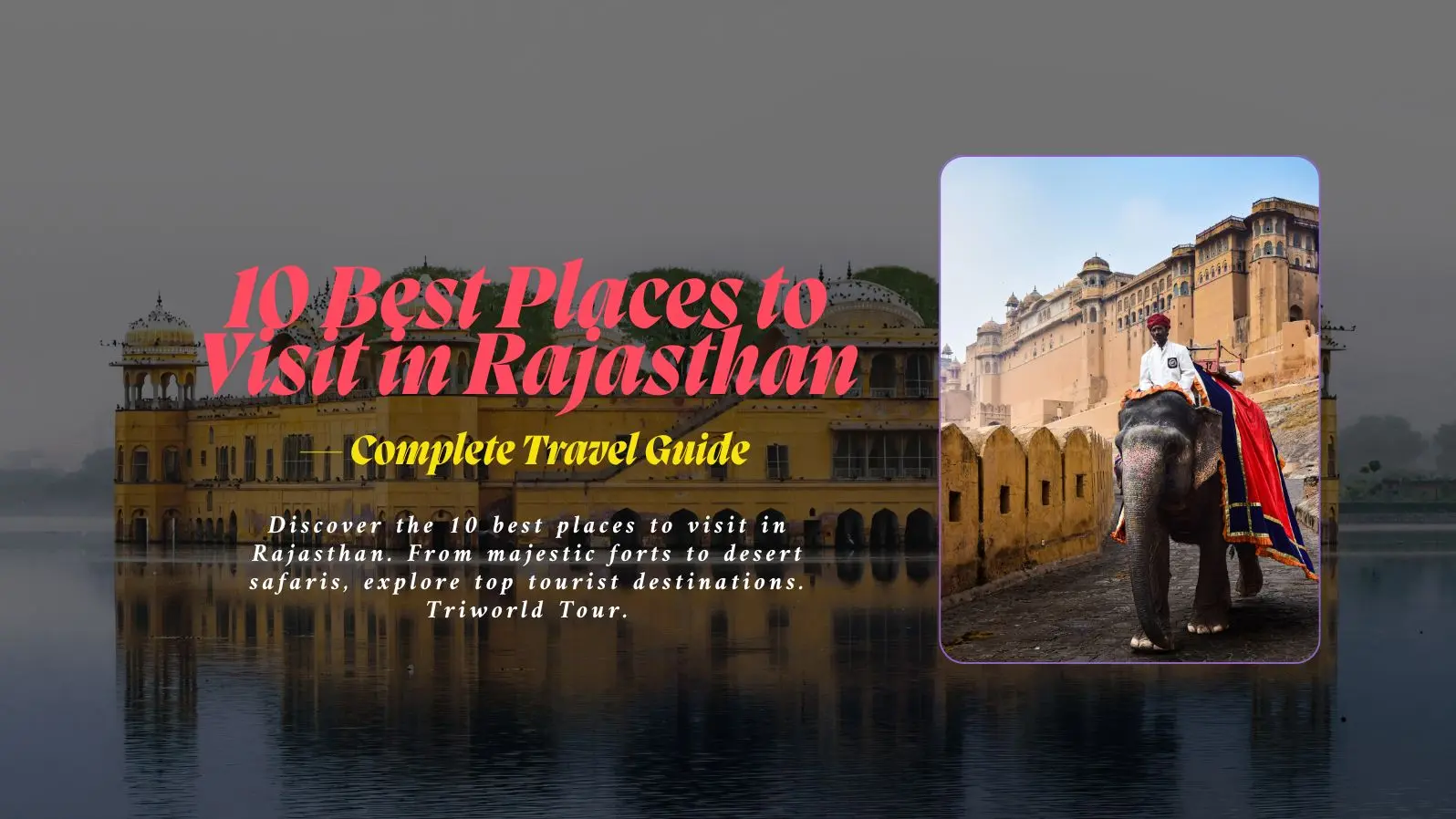
Amber Fort stands majestically on a hilltop, offering breathtaking views of Maota Lake. This stunning fort-palace complex features intricate mirror work in the Sheesh Mahal, beautiful courtyards, and the famous elephant ride up the fort’s ramparts. The light and sound show in the evening brings the fort’s history to life.
City Palace remains the residence of Jaipur’s royal family and houses museums displaying royal artifacts, costumes, and armory. The blend of Rajasthani and Mughal architecture is spectacular, with the Chandra Mahal and Mubarak Mahal being major highlights.
Hawa Mahal, or the Palace of Winds, is Jaipur’s iconic landmark. This five-story pyramidal structure features 953 small windows called jharokhas, designed to allow royal ladies to observe street festivals while remaining unseen.
Jantar Mantar, a UNESCO World Heritage Site, is an astronomical observatory built in 1734. It houses the world’s largest stone sundial and showcases the scientific prowess of ancient India.
Other must-visit attractions include Jal Mahal (Water Palace), Nahargarh Fort for panoramic city views, and Albert Hall Museum showcasing Indo-Saracenic architecture.
Best Time to Visit:
October to March is ideal when the weather is pleasant for exploring the city’s outdoor attractions.
Things to Do:
- Shop for jewelry, textiles, and handicrafts at Johari Bazaar and Bapu Bazaar
- Savor traditional Rajasthani thalis at Chokhi Dhani ethnic village resort
- Experience the magnificent light and sound show at Amber Fort
- Take a hot air balloon ride for aerial views of the pink city
- Visit during the Jaipur Literature Festival (January) for a cultural experience
2. Udaipur
Udaipur, often called the Venice of the East, is the most romantic city in Rajasthan. Founded by Maharana Udai Singh II in 1559, this enchanting city is built around picturesque lakes and surrounded by the Aravalli Hills. The stunning white-marble palaces, serene lakes, and lush gardens create an atmosphere of timeless romance that has made Udaipur a favorite destination for honeymooners and luxury travelers.
Top Attractions:
Lake Pichola is the heart of Udaipur’s charm. This artificial freshwater lake, created in 1362 AD, offers stunning boat rides with views of the City Palace, Jag Mandir, and the majestic Aravalli Hills. Sunset boat rides are particularly magical.
City Palace Udaipur is a magnificent complex overlooking Lake Pichola. This fusion of Rajasthani and Mughal architecture features ornate balconies, towers, and cupolas. The palace museum displays royal artifacts, paintings, and crystal galleries. The Crystal Gallery houses rare crystal furniture gifted by the British.
Jag Mandir, also called the Lake Garden Palace, sits on an island in Lake Pichola. This 17th-century palace served as a summer resort and refuge for royal families. The marble structure with its intricate carvings is breathtaking.
Saheliyon Ki Bari (Garden of Maidens) is a beautiful garden featuring fountains, kiosks, marble elephants, and lotus pools. It was built for the royal ladies and their attendants.
Fateh Sagar Lake, another picturesque lake, offers boating facilities and has three small islands. The Nehru Park on one island is perfect for picnics.
Best Time to Visit:
September to March offers the most pleasant weather for exploring the city and enjoying boat rides.
Things to Do:
- Enjoy romantic boat rides on Lake Pichola during sunset
- Dine at rooftop restaurants overlooking the lakes
- Experience the sound and light show at City Palace
- Visit the Bagore Ki Haveli for traditional Rajasthani dance performances
- Shop for miniature paintings, silver jewelry, and traditional crafts at local markets
- Take a cable car ride to Karni Mata Temple for panoramic city views
3. Jaisalmer
Rising from the golden sands of the Thar Desert like a mirage, Jaisalmer is aptly called the Golden City due to its yellow sandstone architecture that glows brilliantly in the desert sun. Founded in 1156 AD by Rawal Jaisal, this remote desert city offers an authentic desert experience that feels like stepping into an Arabian Nights tale. Jaisalmer is famous for its living fort, magnificent havelis, and thrilling desert safaris.
Check Suggested Tour: Jaisalmer Tour Packages
Top Attractions:
Jaisalmer Fort, also known as Sonar Quila (Golden Fort), is one of the world’s few living forts where people still reside. This UNESCO World Heritage Site houses shops, hotels, ancient havelis, and Jain temples within its massive walls. The fort’s honey-colored sandstone walls seem to merge with the desert landscape, especially during sunrise and sunset.
Sam Sand Dunes, located 40 km from Jaisalmer, offers the quintessential desert experience. These vast stretches of golden sand dunes are perfect for camel safaris, jeep adventures, and witnessing mesmerizing desert sunsets. Cultural programs featuring folk music and dance performances are organized in the evenings at desert camps.
Patwon Ki Haveli is the largest and most elaborate haveli in Jaisalmer. This five-story structure built by a wealthy trader features intricate carvings, beautiful murals, and mirror work that showcase exquisite craftsmanship.
Gadisar Lake, a man-made reservoir, was the main water source for the city. Surrounded by temples and shrines, this peaceful lake is perfect for morning walks and boating. The ornate gateway called Tilon Ki Pol is photogenic.
Bada Bagh (Big Garden) is a garden complex with royal cenotaphs (chhatris) of Maharajas. The symmetrical brown sandstone cenotaphs against the desert landscape create stunning photo opportunities, especially at sunset.
Best Time to Visit:
October to February is ideal when the desert weather is pleasant. Avoid summer months when temperatures soar above 45°C.
Things to Do:
- Experience overnight desert camping under starlit skies
- Enjoy camel safaris through the Thar Desert
- Attend cultural evening programs with folk music and Kalbelia dance
- Take a thrilling jeep safari across sand dunes
- Explore the narrow lanes of the fort and shop for handicrafts
- Visit during the Desert Festival (February) for cultural performances and camel races
- Try parasailing and quad biking at sand dunes
4. Jodhpur
Jodhpur, the second-largest city in Rajasthan, is famously called the Blue City due to the sea of indigo-painted houses in the old town. Founded in 1459 by Rao Jodha, this city is dominated by the magnificent Mehrangarh Fort that towers over the landscape. The blue houses were traditionally painted by Brahmin families but have now become a defining characteristic of the city. Jodhpur serves as a gateway to the Thar Desert and offers a perfect blend of history, culture, and adventure.
Check Suggested Tour: Jodhpur Tour Packages
Top Attractions:
Mehrangarh Fort is one of India’s largest and most impressive forts, perched 400 feet above the city. The fort’s massive walls house palaces with intricate carvings, expansive courtyards, and museums displaying royal palanquins, armory, and paintings. The fort offers breathtaking panoramic views of the blue city below. Don’t miss the audio guide narrated by the current Maharaja.
Umaid Bhawan Palace is one of the world’s largest private residences, partially converted into a luxury hotel and museum. Built with golden-yellow sandstone, this Indo-Saracenic architecture marvel houses a remarkable collection of clocks, stuffed animals, and vintage cars.
Jaswant Thada is a beautiful white marble cenotaph built in memory of Maharaja Jaswant Singh II. The serene memorial features intricate marble lattice work and offers peaceful gardens overlooking a lake.
Clock Tower and Sardar Market form the bustling heart of the old city. The vibrant market is perfect for shopping traditional textiles, handicrafts, spices, and antiques. The energy and colors of this market provide an authentic local experience.
Mandore Gardens, the former capital before Jodhpur, features beautiful gardens, temples, and high rock terraces with cenotaphs of Jodhpur’s rulers.
Best Time to Visit:
October to March offers comfortable weather for exploring the city’s outdoor attractions.
Things to Do:
- Walk through the blue-painted lanes of the old city for unique photography
- Experience the thrilling Flying Fox zip-lining at Mehrangarh Fort
- Shop for textiles, jewelry, handicrafts, and famous Jodhpuri mojris (shoes) at Sardar Market
- Try authentic Rajasthani cuisine including mirchi bada, mawa kachori, and makhaniya lassi
- Attend cultural performances at Mehrangarh Fort
- Take a heritage walk through the old city
- Visit nearby Osian for desert safari experience
5. Pushkar
Pushkar is one of India’s oldest and most sacred cities, nestled in a valley beside a picturesque lake. This small town of 15,000 people holds immense spiritual significance for Hindus and is home to the world’s only temple dedicated to Lord Brahma. Pushkar attracts both religious pilgrims and international travelers seeking spiritual experiences, yoga retreats, and the famous annual Camel Fair. The town’s unique blend of spirituality, culture, and quirky charm makes it an essential stop on any Rajasthan itinerary.
Top Attractions:
Pushkar Lake is the spiritual heart of the town. This sacred lake, believed to have been created by Lord Brahma, is surrounded by 52 ghats where pilgrims perform ritual baths. The evening aarti (prayer ceremony) on the ghats creates a mystical atmosphere with chanting, lamps, and bells. Walking around the lake during sunrise or sunset is a peaceful experience.
Brahma Temple is the world’s only temple dedicated to Lord Brahma, the creator in Hindu mythology. Built in the 14th century with marble and stone, this temple features a four-headed idol of Brahma and a distinctive red spire. The temple gets particularly crowded during Kartik Purnima.
Savitri Temple, perched on a hilltop, requires a moderate hike or cable car ride to reach. The panoramic views of Pushkar town, desert landscape, and Aravalli ranges from the top are spectacular, especially at sunset.
Pushkar Camel Fair held annually in November is one of the world’s largest camel fairs. This vibrant festival features camel trading, cultural performances, competitions, handicraft stalls, and thousands of domestic and international visitors. It’s an explosion of colors, sounds, and cultural experiences.
Best Time to Visit:
October to March is ideal for pleasant weather. November is special if you want to experience the famous Camel Fair, but book accommodations well in advance.
Things to Do:
- Attend the mesmerizing evening aarti ceremony at Pushkar Lake
- Explore colorful bazaars selling jewelry, textiles, leather goods, and hippie-style clothing
- Join yoga and meditation classes at numerous ashrams and retreats
- Take a camel ride in the surrounding desert landscape
- Visit during the Pushkar Camel Fair for a unique cultural experience
- Try local vegetarian cuisine (the entire town is vegetarian and alcohol-free)
- Get a henna tattoo from local artists
- Watch sunset from Savitri Temple hilltop
6. Ajmer
Located just 14 km from Pushkar, Ajmer is an important pilgrimage city revered by both Muslims and Hindus. The city is famous for the Ajmer Sharif Dargah, the shrine of Sufi saint Khwaja Moinuddin Chishti, which attracts millions of devotees from around the world. Founded by Chahamana dynasty ruler Ajayaraja II, Ajmer has a rich historical significance and served as a major center during the Mughal period. The city perfectly exemplifies India’s religious harmony and cultural diversity.
Top Attractions:
Ajmer Sharif Dargah is one of the most sacred Sufi shrines in India. The tomb of the 13th-century saint Khwaja Moinuddin Chishti draws devotees of all faiths seeking blessings and spiritual peace. The beautiful Indo-Islamic architecture features marble domes, ornate gates, and intricate decorations. The atmosphere during qawwali (Sufi devotional music) performances is deeply moving. The annual Urs festival commemorating the saint’s death anniversary is a major event.
Ana Sagar Lake is a scenic artificial lake built in the 12th century by King Anaji. Surrounded by marble pavilions called Baradaris, the lake offers peaceful sunset views and boating facilities. The Daulat Bagh gardens on the lakeshore are perfect for leisurely walks.
Adhai Din Ka Jhonpra is a magnificent Indo-Islamic architecture monument that was originally a Sanskrit college before being converted into a mosque in the 12th century. The name literally means “two-and-a-half day hut,” based on local legends. The intricately carved pillars and seven-arched screen wall showcase exceptional craftsmanship.
Nasiyan Jain Temple, also called the Red Temple, is famous for its spectacular Swarna Nagari (City of Gold) hall. This museum features a detailed gold-plated wooden display depicting Jain mythology, with thousands of miniature figures recreating scenes from Jain scriptures.
Best Time to Visit:
October to March offers comfortable weather for exploring the city’s religious sites.
Things to Do:
- Visit the famous Ajmer Sharif Dargah and experience Sufi traditions
- Take a peaceful boat ride on Ana Sagar Lake during sunset
- Explore local markets for traditional crafts and sweets
- Attend qawwali performances at the Dargah
- Visit nearby Pushkar for a combined spiritual experience
- Try delicious local sweets like sohan halwa
- Photography around the lake and historical monuments
7. Ranthambore
Ranthambore National Park is one of India’s premier wildlife destinations and offers the best opportunity to spot Royal Bengal Tigers in their natural habitat. Located in the Sawai Madhopur district, this 392-square-kilometer park was once the hunting ground of the Maharajas of Jaipur. In 1980, it became part of Project Tiger, a conservation initiative to protect India’s dwindling tiger population. Beyond tigers, the park is home to leopards, deer, wild boars, crocodiles, and over 300 bird species, making it a paradise for wildlife photographers and nature enthusiasts.
Top Attractions:
Ranthambore National Park is divided into 10 safari zones, each offering unique landscapes and wildlife viewing opportunities. Zones 1-5 are considered prime tiger territory. The park features a mix of dry deciduous forests, grasslands, and rocky terrain, interspersed with lakes and ancient ruins. Early morning and late afternoon safaris offer the best chances for tiger sightings.
Ranthambore Fort, a UNESCO World Heritage Site located within the park, dates back to the 10th century. This massive fort complex includes temples, palaces, and pavilions. The fort offers panoramic views of the park and is accessible by vehicle. Ancient temples dedicated to Ganesha and Shiva attract pilgrims, especially during the Ganesh Chaturthi festival.
Padam Talao is the largest lake in the park, famous for the picturesque Jogi Mahal on its banks. Tigers are frequently spotted around this water source, making it a favorite safari spot. The lake is also home to crocodiles and various water birds.
Best Time to Visit:
The park is open from October to June. April and May, despite being hot, offer the best tiger sighting opportunities as animals congregate around water sources. October to March provides pleasant weather for safaris.
Things to Do:
- Book canter or jeep safaris through the park (advance booking essential)
- Wildlife photography with professional guides
- Bird watching, especially during winter months
- Visit the historic Ranthambore Fort
- Nature walks in buffer zones
- Evening cultural programs at resorts
- Visit nearby Surwal Lake for migratory birds
8. Mount Abu
Mount Abu is Rajasthan’s only hill station, providing a refreshing contrast to the state’s predominantly desert landscape. Perched at an elevation of 1,220 meters in the Aravalli Range, this green oasis offers cool mountain air, lush forests, and serene lakes. The town has been a summer retreat for Rajasthani royalty and British officers since colonial times. Beyond its natural beauty, Mount Abu is renowned for the exquisite Dilwara Jain Temples, considered masterpieces of marble architecture. The hill station serves as a perfect escape from Rajasthan’s summer heat.
Top Attractions:
Dilwara Jain Temples are the crown jewels of Mount Abu. This complex of five marble temples built between the 11th and 13th centuries showcases phenomenal marble craftsmanship. The intricate carvings on pillars, doorways, ceilings, and panels are so delicate they seem translucent. The Vimal Vasahi and Luna Vasahi temples are particularly stunning. Strict photography restrictions apply inside to preserve sanctity.
Nakki Lake is the heart of Mount Abu, a picturesque artificial lake surrounded by hills and rock formations. Boating on this peaceful lake is a popular activity. The lake is surrounded by parks, restaurants, and viewpoints. Legend says the lake was carved out by gods using their nails (nakhs).
Guru Shikhar, at 1,722 meters, is the highest peak in the Aravalli Range and Mount Abu. The summit features a Vishnu temple and offers breathtaking panoramic views of the surrounding countryside. A short stairway leads to the top.
Sunset Point and Honeymoon Point offer spectacular views of the sun setting over the plains below. These viewpoints get crowded in evenings but provide memorable experiences.
Toad Rock is a unique rock formation resembling a toad, popular for photography and rock climbing. The formation sits above Nakki Lake.
Best Time to Visit:
Mount Abu is pleasant year-round. Summer (March-June) attracts visitors seeking relief from heat. Winter (November-February) can be quite cold. Monsoon (July-September) brings lush greenery but occasional heavy rains.
Things to Do:
- Peaceful boating on Nakki Lake
- Trekking and nature walks through forested trails
- Visit the magnificent marble Dilwara Temples
- Enjoy panoramic views from Guru Shikhar peak
- Watch stunning sunsets from designated viewpoints
- Shop for tribal handicrafts and woolen garments at local markets
- Visit the Wildlife Sanctuary for flora and fauna
- Photography at unique rock formations
9. Bikaner
Bikaner, founded by Rao Bika in 1488, is a desert city famous for its camel breeding, magnificent forts, and delicious snacks. Less touristy than Jaipur or Jodhpur, Bikaner offers an authentic Rajasthani experience with its well-preserved heritage. The city is renowned for the National Research Centre on Camel and the unusual Karni Mata Temple. Bikaner’s location in the Thar Desert gives it a distinctive character, with ornate havelis built by wealthy merchants dotting the narrow lanes. The city is also famous for its mouth-watering Bikaneri bhujia, a spicy snack enjoyed across India.
Top Attractions:
Junagarh Fort, unlike most Rajasthani forts, is built on plain land rather than a hilltop. This unconquered fort features magnificent palaces with intricate stone carvings, lacquer work, and mirror work. The museum houses royal artifacts, Sanskrit and Persian manuscripts, and miniature paintings. The fort’s architecture combines Rajput, Mughal, and Gujarati styles.
Karni Mata Temple, located 30 km from Bikaner in Deshnoke, is famously known as the Rat Temple. Thousands of rats considered sacred live in this temple and are fed and worshipped by devotees. Spotting a white rat is considered highly auspicious. While unusual, this temple offers a unique cultural experience and reflects local religious traditions.
Lalgarh Palace is an architectural marvel built of red sandstone, combining Rajput, Mughal, and European styles. Part of the palace has been converted into a heritage hotel and museum showcasing royal hunting trophies, photographs, and artifacts.
National Research Centre on Camel provides insights into camel breeding, products, and research. Visitors can learn about camel varieties, ride camels, and purchase camel milk products. It’s unique to Bikaner and interesting for those curious about these desert ships.
Rampuria Havelis are a group of 15th-century merchant havelis showcasing excellent craftsmanship with red sandstone carvings, jharokhas, and detailed facades.
Best Time to Visit:
October to February offers the most comfortable weather. January hosts the Camel Festival featuring camel races, acrobatics, and cultural performances.
Things to Do:
- Visit the unique Karni Mata Rat Temple (wear socks or go barefoot as per temple rules)
- Explore the undefeated Junagarh Fort and its museums
- Shop for famous Bikaneri bhujia and other savory snacks
- Visit heritage havelis in the old city
- Camel safari and desert experiences
- Attend the Camel Festival if visiting in January
- Try local delicacies like ghevar, rasgulla, and kachori
- Visit camel research center for unique experience
10. Chittorgarh
Chittorgarh represents the quintessential spirit of Rajput pride, valor, and sacrifice. This historic city is home to the massive Chittorgarh Fort, a UNESCO World Heritage Site and India’s largest fort complex. The fort has witnessed three major battles and legendary acts of Jauhar (mass self-immolation by women) when faced with defeat. The ruins and monuments within the fort tell tales of heroism, particularly of Rani Padmini, Maharana Pratap, and other Rajput warriors. Though now in ruins, Chittorgarh Fort remains a powerful symbol of Rajput resistance and is essential for understanding Rajasthan’s warrior culture.
Top Attractions:
Chittorgarh Fort sprawls over 700 acres on a 180-meter high hill. The fort complex includes palaces, temples, towers, and reservoirs. The massive fortification walls stretch 13 km. The fort has seven gates (pols) before reaching the main gate. The expansive complex requires several hours to explore properly.
Vijay Stambh (Victory Tower) is a 37-meter tall, nine-story tower built by Maharana Kumbha to commemorate his victory over Mahmud Khilji. This magnificent structure is covered with intricate carvings of Hindu deities, weapons, and inscriptions. Climbing to the top offers panoramic fort views.
Rana Kumbha Palace is the ruined palace where Rani Padmini performed Jauhar. The extensive ruins include underground cellars where the tragic mass self-immolation occurred. The palace also houses stables, Shiva temple, and underground passages.
Padmini Palace is surrounded by a lotus pool and reflects in the water. According to legend, Alauddin Khilji saw Rani Padmini’s reflection in this pool’s water, which sparked his obsessive desire and eventual siege of the fort.
Meera Temple is dedicated to the mystical poetess and Krishna devotee Meera Bai, who was born in Chittorgarh. The temple features beautiful carvings and attracts devotees.
Kirti Stambh (Tower of Fame) is a 22-meter high tower dedicated to Adinath, the first Jain Tirthankara. Built in the 12th century, it’s adorned with figures of Jain Tirthankaras.
Best Time to Visit:
October to March provides comfortable weather for exploring the expansive fort. Summers are extremely hot, making fort exploration difficult.
Things to Do:
- Explore India’s largest and most historically significant fort
- Learn about Rajput history, valor, and traditions of Jauhar
- Climb Vijay Stambh for panoramic views
- Visit numerous temples and palaces within the fort
- Attend the evening sound and light show narrating fort’s history
- Photography of towers, palaces, and fort architecture
- Visit nearby Bassi Wildlife Sanctuary
Best Time to Visit Rajasthan
Choosing the right time to visit Rajasthan significantly impacts your travel experience. The state experiences extreme temperature variations between seasons.
Winter (October to March) is the peak tourist season and the best time to visit Rajasthan. Temperatures range from 10°C to 27°C, making it perfect for sightseeing, desert safaris, and outdoor activities. December and January can be quite cold in desert areas at night, requiring warm clothing. This period hosts numerous festivals including Pushkar Camel Fair (November), Desert Festival in Jaisalmer (February), and Jaipur Literature Festival (January). Accommodation prices are higher during this season.
Summer (April to June) sees scorching temperatures often exceeding 45°C, especially in desert regions like Jaisalmer and Bikaner. However, this is the best time for wildlife enthusiasts to visit Ranthambore as animals congregate around water sources. Mount Abu becomes a popular summer retreat due to its cool climate. Tourist crowds are minimal, and hotels offer significant discounts. Early morning and late evening are the only comfortable times for outdoor activities.
Monsoon (July to September) brings moderate rainfall, transforming the desert landscape into green expanses. While temperatures cool down to 25-35°C, humidity increases. Some rural areas may become inaccessible. Ranthambore National Park closes during monsoon. However, Mount Abu and Udaipur look particularly beautiful during this season. This is the best time for budget travelers as accommodation costs drop significantly.
How to Reach Rajasthan
Rajasthan’s excellent connectivity makes it easily accessible from major Indian cities and international destinations.
By Air
Rajasthan has three major airports serving domestic and limited international flights:
- Jaipur International Airport is the main airport, well-connected to Delhi, Mumbai, Bangalore, and international destinations like Dubai. It’s the primary entry point for most tourists.
- Jodhpur Airport handles domestic flights from Delhi, Mumbai, and other major cities. It’s convenient for travelers planning to start their journey from western Rajasthan.
- Udaipur Airport receives domestic flights and is perfect for those wanting to begin their trip in the romantic city of lakes.
Private taxis, app-based cabs, and airport buses provide connectivity from airports to city centers.
By Train
Rajasthan has an extensive railway network connecting all major cities. Important railway junctions include:
- Jaipur Junction is well-connected to Delhi, Mumbai, Agra, Kolkata, and other major Indian cities.
- Jodhpur Junction connects to major cities across India and serves as a gateway to desert destinations.
- Udaipur City Railway Station has good connectivity, though fewer direct trains compared to Jaipur and Jodhpur.
Palace on Wheels and Royal Rajasthan on Wheels are luxury tourist trains offering week-long journeys covering major Rajasthan destinations with royal hospitality and comfort.
By Road
Rajasthan is well-connected by National Highways. State-run buses (Rajasthan State Road Transport Corporation – RSRTC) operate regular services between cities. Private luxury buses and car rentals are also available. Popular road routes include Delhi to Jaipur (280 km), Jaipur to Udaipur (390 km), and Jaipur to Jaisalmer (560 km). Self-drive road trips through Rajasthan offer flexibility and adventure.
Frequently Asked Questions (FAQ)
1. What is the best place to visit in Rajasthan?
The best place depends on your interests. Jaipur is ideal for first-timers with its palaces and accessibility. Udaipur is perfect for couples seeking romance and lakeside beauty. Jaisalmer offers the most authentic desert experience with camel safaris and golden fort. Ranthambore is best for wildlife enthusiasts hoping to spot tigers. Each destination offers unique experiences, so the “best” varies by preference.
2. How many days are enough for Rajasthan?
A minimum of 7-10 days is recommended to cover major destinations like Jaipur, Udaipur, Jodhpur, and Jaisalmer comfortably. For a comprehensive tour including offbeat places, 12-15 days is ideal. Short 4-5 day trips can cover Jaipur and one or two nearby cities. The state is large and diverse, so more time allows deeper exploration without feeling rushed.
3. Is Rajasthan safe for solo female travelers?
Yes, Rajasthan is generally safe for solo female travelers. The state welcomes tourists, and major cities have good infrastructure. However, take standard precautions: dress modestly, avoid isolated areas after dark, book accommodations in reputable areas, use authorized transportation, and trust your instincts. Stay connected with family/friends. Many solo female travelers have wonderful experiences in Rajasthan by being street-smart and respectful of local culture.
4. What is Rajasthan famous for?
Rajasthan is famous for its magnificent forts and palaces showcasing royal heritage, expansive Thar Desert with golden sand dunes, vibrant culture with colorful festivals like Pushkar Camel Fair, intricate handicrafts including textiles, jewelry, and miniature paintings, delicious cuisine like dal baati churma and laal maas, wildlife sanctuaries including Ranthambore for tiger sighting, and warm hospitality. It’s India’s largest state by area and epitomizes royal grandeur.
5. Which month is best for Rajasthan tour?
October to March is the best period for Rajasthan tours. Specifically, November to February offers the most pleasant weather with temperatures ranging from 10°C to 27°C, perfect for sightseeing and outdoor activities. December-January can be cold at night. November is special for Pushkar Camel Fair. Avoid May-July when temperatures exceed 45°C making tourism uncomfortable. Wildlife enthusiasts should visit Ranthambore in April-May for best tiger sightings despite the heat.
6. What should I buy in Rajasthan?
Rajasthan offers excellent shopping opportunities: colorful textiles including bandhani, block prints, and leheriya; silver jewelry and precious gemstones; blue pottery from Jaipur; miniature paintings; leather goods like mojris (traditional shoes) and bags; puppets and handicrafts; marble and stone sculptures; lac bangles; camel leather items; and local spices. Each city specializes in certain crafts. Government emporiums offer fixed prices while markets require bargaining. Bring extra luggage space!
7. Is Rajasthan expensive to visit?
Rajasthan caters to all budgets. Budget travelers can manage on ₹1,500-2,500 per day with budget hotels, local transport, and street food. Mid-range travelers should budget ₹3,000-6,000 daily for comfortable hotels, private transport, and decent restaurants. Luxury travelers spending ₹10,000+ daily can experience heritage hotels, fine dining, and premium services. Peak season (October-March) is more expensive. Booking tours with operators like Triworld Tour often provides better value through packages.
Conclusion
Rajasthan truly lives up to its reputation as India’s most enchanting destination. From the architectural marvels of Jaipur’s Pink City to the romantic lakeside setting of Udaipur, from the golden desert landscapes of Jaisalmer to the wildlife thrills of Ranthambore, these 10 best places to visit in Rajasthan offer diverse experiences that create unforgettable memories.
Each destination showcases a different facet of Rajasthan’s rich cultural tapestry the royal grandeur, spiritual depth, natural beauty, and warm hospitality that defines this magnificent state. Whether you’re seeking adventure in the Thar Desert, spiritual solace in sacred towns, wildlife encounters in national parks, or simply want to immerse yourself in royal heritage, Rajasthan tourism offers something special for every traveler.
The best time to visit is between October and March when the weather is perfect for exploring forts, taking desert safaris, and attending vibrant festivals. Plan at least 7-10 days to truly experience the magic of Rajasthan without feeling rushed.
Ready to embark on your royal Rajasthan adventure? Triworld Tour specializes in creating customized Rajasthan tour packages tailored to your interests, budget, and schedule. From heritage hotel stays to desert camps, from guided tours to adventure activities, we handle every detail so you can focus on creating memories.
Book Your Dream Rajasthan Tour with Triworld Tour Today!
Contact us for a free consultation and customized itinerary. Let us help you discover why Rajasthan is called the Land of Kings and why it should be at the top of your travel bucket list!


Udaipur Sightseeing List: Explore Top Places By Udaipur Bus Tour
March 8, 2026 - 8:27 pm[…] Read More : 10 Best Places to Visit in Rajasthan […]
Important Places To Visit In Jaipur | Jaipur In Two Days Travel Guide
March 11, 2026 - 8:36 pm[…] Read More : 10 Best Places to Visit in Rajasthan […]
Things To Do In Jaipur In Evening: 12 Unique Experiences To Try
March 11, 2026 - 8:55 pm[…] Read More : 10 Best Places to Visit in Rajasthan […]